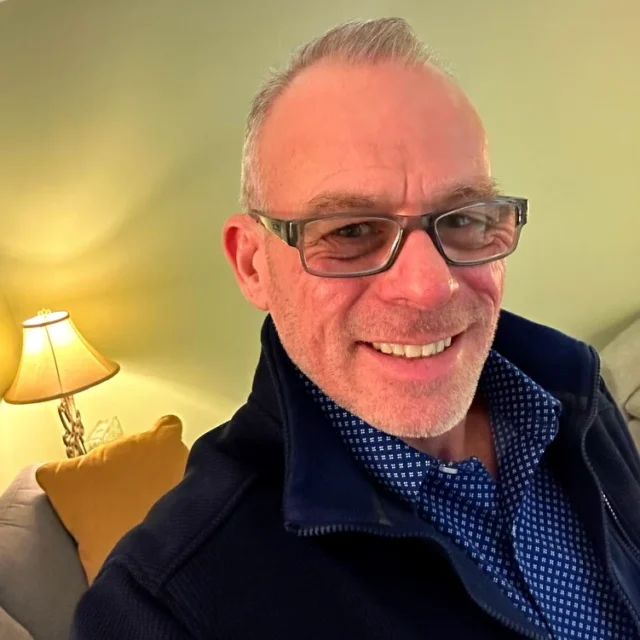
G. Marc Ackerman, LCSW, CCTP, has worked in addiction treatment for more than two decades, from frontline counseling in community mental health to leading residential and outpatient programs in New Jersey and New York City. Along the way he introduced trauma-informed care in every program he led.
He founded Mountain Solid Healing & Wellness in Pennsylvania’s Pocono Mountains, where he works with individuals, couples, and families at the intersection of trauma, addiction, and attachment. He offers somatic and polyvagal-informed approaches, attachment wound repair, Gottman-based couples therapy, ACT, DBT, and mindfulness for clients facing anxiety, depression, and ADHD as well as trauma and addiction. He trained in expanded states therapy at the California Institute of Integral Studies, and it is a central part of his work. His work is clinically grounded, built for the whole person, and rooted in a simple message: you don’t have to do this alone.
G. Marc's Presentations
Workshop
Expanded States Therapy for Substance Use Disorders
This 50-minute presentation reviews the clinical research on expanded states therapy for substance use disorders: LSD, psilocybin, ketamine, MDMA, and ibogaine for alcohol, tobacco, cocaine, and opioid use
disorders. Each finding is graded by strength of evidence, and none of these substances is FDA approved for a substance use disorder. The presentation sets out the current federal and state legal status of these substances, with attention to New Jersey, along with possible mechanisms, risks and limitations, and the relevance of attachment.
It then presents a clinical continuum of screening, preparation, journey, and integration derived from trial protocols, and closes with the roles available to clinicians who do not administer these substances: harm reduction, integration, and referral to legal pathways. Participants will be able to separate established, preliminary, and early findings; describe the federal and state legal status of psilocybin, MDMA, ketamine, and ibogaine and what is still changing; and outline the continuum and the roles open to them. The session ends with open Q&A, and attendees receive a three-page handout with the evidence map, legal status tables, the continuum, and references.